Greenhouse Gas Emissions
Current Status Summary (2026 update)
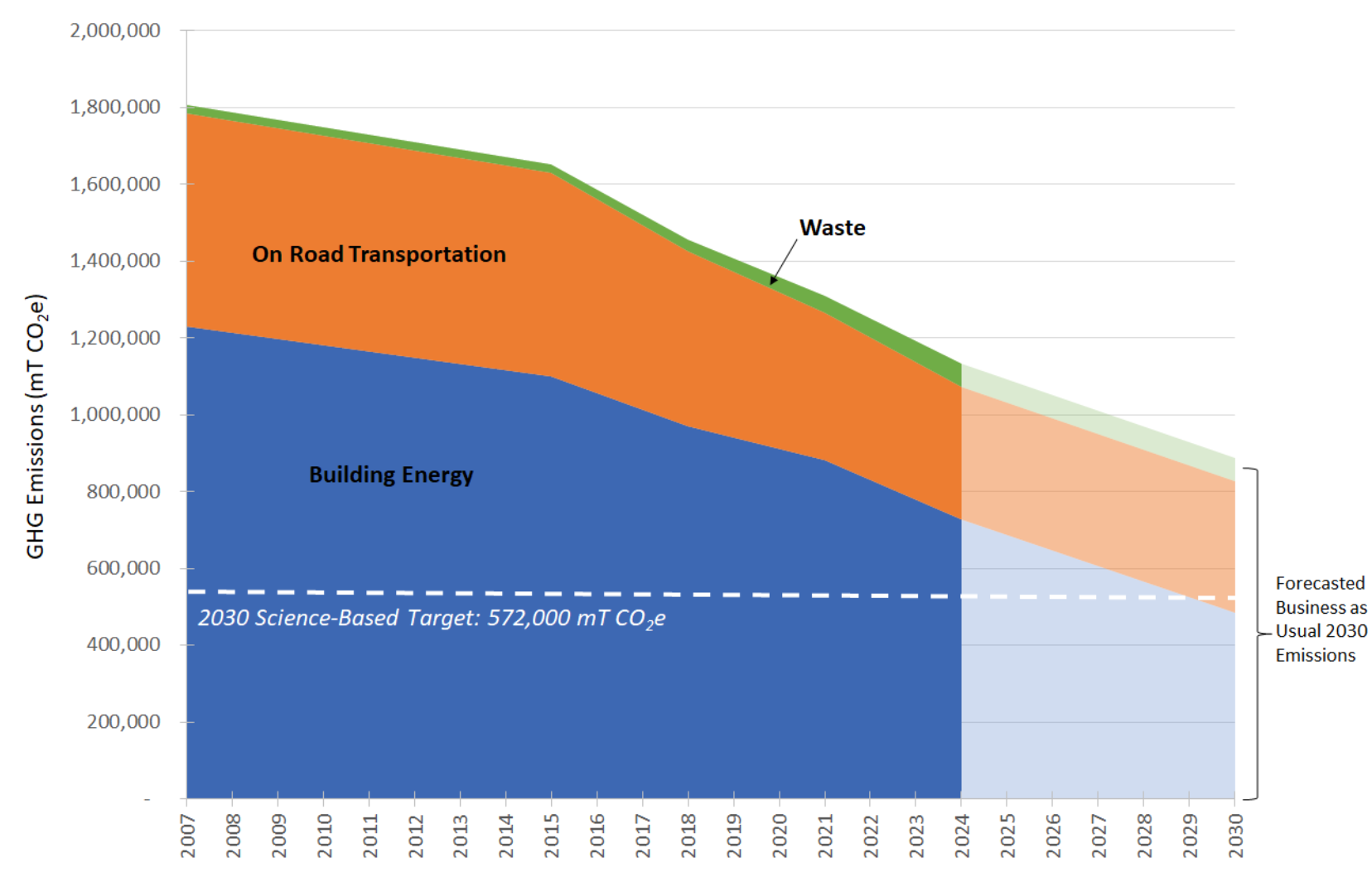
The 2024 GHG Inventory shows that Lakewood’s overall GHG emissions have decreased by 22% since 2018. Building emissions have decreased by 25% and transportation emissions have decreased by 24%. Waste emissions appear to have increased, primarily due to changes in how waste volumes are calculated. This will continue to be monitored going forward.

What are we measuring
Greenhouse gases (GHG) are gases like carbon dioxide and methane that trap heat in the Earth’s atmosphere. They help regulate the planet’s temperature, but rising levels from human activities are causing the climate to warm more rapidly than ever before. A community GHG inventory measures the total emissions generated within Lakewood from three major sources: buildings (such as homes and offices), transportation (such as cars and buses), and waste (such as landfill waste and yard debris).

Why is this important to measure
Greenhouse gas (GHG) emissions inventories provide Lakewood leaders, community members, and city staff with a snapshot of carbon emissions created by residents, businesses, institutions, and industries. This helps understand the existing state of Lakewood’s carbon emissions and inform decisions on where to focus climate change-related policies and programs. By comparing inventories over time, we can track progress of climate mitigation efforts towards achieving the adopted Comprehensive Plan targets.

Data Sources and Methodology
Lakewood Communitywide GHG inventory from Lakewood Sustainability Division
Estimated emissions are calculated using data from multiple sources, including utilities, transportation agencies, and waste haulers, in accordance with the Global Protocol for Community-Scale GHG Emissions (GPC).
Baseline
2018 emissions – 1,455,552 mT CO₂e
Current year
2024 – 1,133,511 metric tons CO₂ equivalent (mT CO₂e)
Target
Reduce GHG emissions to achieve net zero by 2050 (interim targets: 60.7% reduction by 2030, 80.4% reduction by 2040).
Update frequency
Approximately every 3 years
 Links
- PDF – Lakewood 2024 Greenhouse Gas Inventory Report
- Interactive Dashboard – Lakewood – Climate Action Plan for 2030